
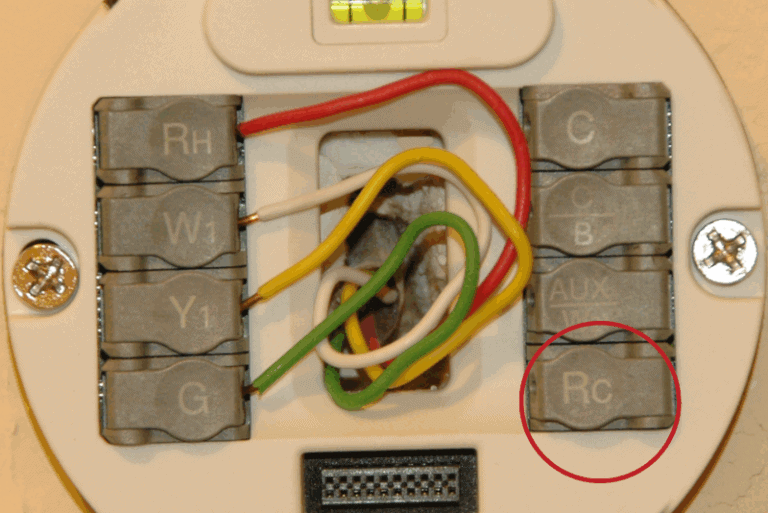
If you’ve ever peeked behind your thermostat, you might have noticed a wire labeled “RC” and wondered, “What is the RC wire for a thermostat? Many homeowners in Charlotte face confusion when setting up or troubleshooting thermostats, unsure which wires do what. Misconnecting wires can lead to system issues or even damage your HVAC unit.
The good news is that understanding the RC wire and its purpose is simpler than it seems. In this guide, we’ll break down everything you need to know about the RC wire for thermostats, why it matters, and how it connects to your HVAC system.
What Does the RC Wire Do?

The RC wire is part of your thermostat’s wiring system. Its primary role is to provide power to the cooling system.
- RC stands for “Red Cooling” — the wire supplies 24 volts from your HVAC system to the thermostat specifically for air conditioning.
- It is typically red, but always double-check your thermostat’s manual and wiring diagram.
- If your thermostat also controls heating, it usually has a separate RH (Red Heating) wire.
In simpler terms, think of the RC wire as the lifeline that allows your thermostat to communicate with your AC unit. Without it, your air conditioning won’t respond correctly to your temperature settings.
How to Identify the RC Wire
Knowing what RC wire for a thermostat is one thing, but spotting it among other wires is equally important.
- Color coding: RC wires are often red, while other wires may be blue, green, yellow, or white.
- Labeling: Most modern thermostats label the terminals, making it easier to connect correctly. Look for the “RC” terminal on the backplate.
- Dual systems: If your home has a separate heating and cooling system, your thermostat may have both RH and RC wires. A jumper might connect them, but many smart thermostats require separate connections.
Checking the wiring before installation or replacement can prevent short circuits and system malfunctions.
Common Problems With the RC Wire
Misunderstanding what RC wire is for a thermostat can lead to a few common HVAC headaches:
- No cooling response: If the RC wire isn’t connected correctly, your AC won’t turn on.
- Short circuits or tripped breakers: Incorrect wiring can cause electrical issues that affect the thermostat or HVAC unit.
- Smart thermostat errors: Many modern thermostats need separate RC and RH connections. Using a jumper incorrectly can trigger system warnings.
If you notice your thermostat isn’t controlling cooling properly, the RC wire is often the first thing to check.
Installing or Replacing the RC Wire
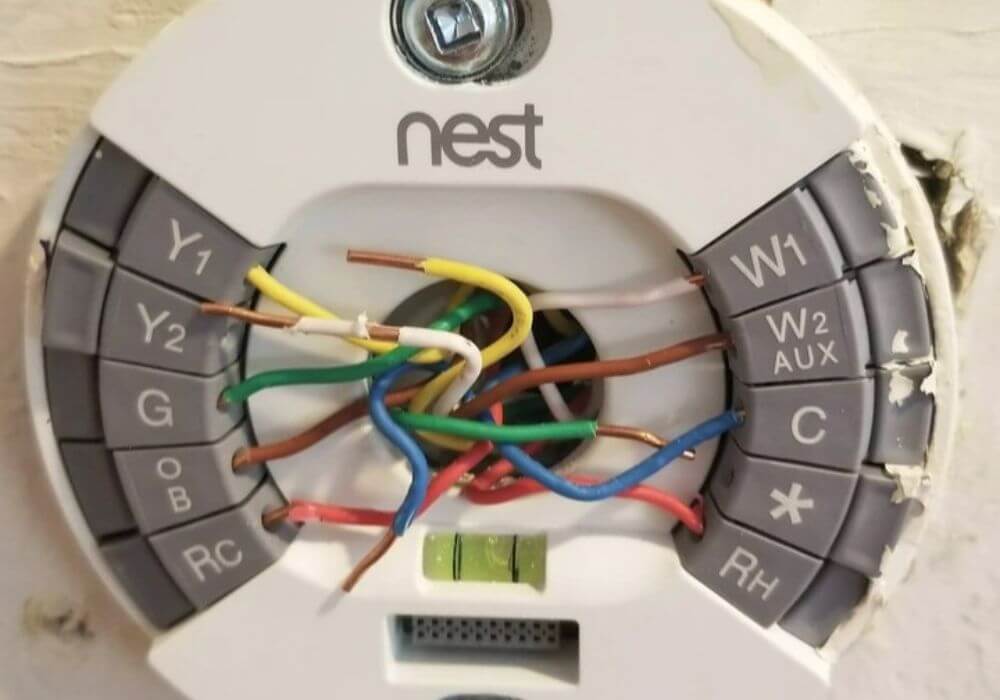
Whether you’re upgrading your thermostat or troubleshooting, handling the RC wire safely is key.
- Turn off power first: Always switch off your HVAC system before touching wires.
- Label old wires: If replacing an old thermostat, label wires to avoid confusion.
- Connect to RC terminal: The RC wire should go directly to the RC terminal on your new thermostat.
- Check compatibility: Some smart thermostats require separate RC and RH wires, while others allow a jumper between them.
If you’re uncomfortable handling electrical wiring, it’s always safer to call a Charlotte HVAC professional to avoid mistakes.
Tips for Charlotte Homeowners
Here are some quick tips when dealing with the RC wire in your home:
- Always double-check the wiring diagram in your thermostat manual.
- Label wires before disconnecting your old thermostat to make installation easier.
- Avoid mixing up RC and RH wires, especially if you have a dual system.
- Use a professional if you’re unsure; HVAC wiring mistakes can be costly.
Understanding the RC wire ensures your thermostat controls cooling efficiently and prevents system damage.
Conclusion
Knowing what RC wire is for a thermostat is essential for any Charlotte homeowner looking to install, upgrade, or troubleshoot their HVAC system. The RC wire powers your cooling system, making it a critical component for air conditioning operation. By identifying, connecting, and handling it correctly, you ensure your thermostat functions smoothly and your home stays comfortable.
Always turn off power before working with wiring, follow instructions carefully, and don’t hesitate to consult a professional HVAC technician for guidance. Proper understanding of the RC wire keeps your system safe, efficient, and reliable.
Frequently Asked Questions
1. Can I use one wire for both heating and cooling on my thermostat?
In some older systems, a jumper connects the RH and RC wires, but many modern or smart thermostats require separate connections for proper operation.
2. What happens if the RC wire is not connected correctly?
Your air conditioning may fail to turn on, or the thermostat may show errors, potentially causing short circuits or system damage.
3. Is the RC wire always red?
Typically, yes, RC wires are red, but it’s best to check your thermostat manual and wiring labels before making any connections.