
Is HVAC zoning worth it? If your home never feels evenly comfortable, you’re not alone. In Charlotte, NC, many homeowners deal with hot upstairs rooms, freezing bedrooms, and rising energy bills that never seem to make sense.
The real frustration is simple. You set your thermostat… but different rooms still feel completely different. That’s where HVAC zoning comes in, but is it actually worth the investment?
Let’s break it down in a clear, practical way so you can decide if it makes sense for your home.
What HVAC Zoning Actually Means
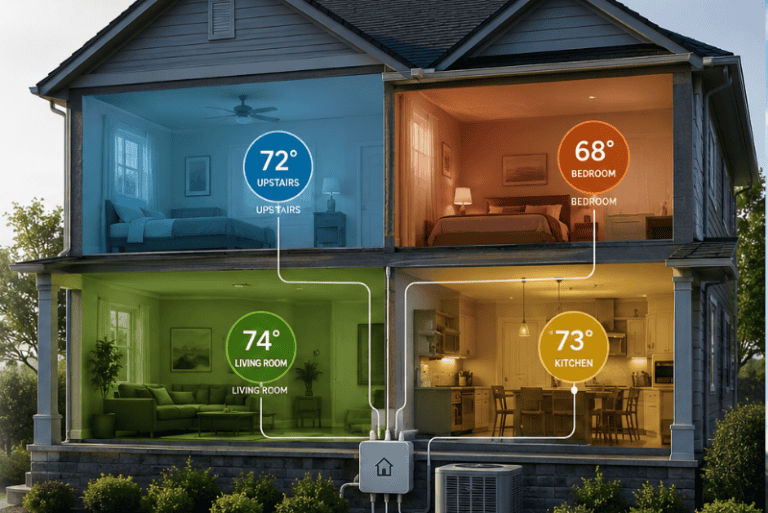
HVAC zoning is a system that divides your home into different “zones,” each controlled by its own thermostat. Instead of one temperature controlling the whole house, each area can be adjusted independently.
So your upstairs bedroom can stay cooler while your living room stays slightly warmer. Dampers inside your ductwork open and close to direct airflow where it’s needed most.
It sounds simple, but the impact can be big, especially in multi-level homes common in Charlotte neighborhoods.
Still, zoning isn’t just about comfort. It also helps when homes struggle with uneven cooling, like when some areas don’t get enough airflow, leading to the AC not cooling properly.
Is HVAC Zoning Worth It?

So, is HVAC zoning worth it? The answer depends on your home layout, comfort issues, and energy goals.
If you constantly argue over the thermostat or notice big temperature differences between floors, zoning can be a game-changer. It helps balance comfort without overworking your system.
But if your home already cools evenly and your system is newer, you may not notice a dramatic difference.
Many homeowners first realize they have a problem when they notice uneven temperatures in the home. Some rooms stay warmer or cooler than others, often caused by airflow or duct design problems like cold room issues.
Zoning becomes most valuable when:
- You have a multi-story home
- Certain rooms get more sun exposure
- Family members prefer different temperatures
- Your HVAC system struggles to distribute air evenly
In Charlotte’s hot, humid summers, those differences can feel even more extreme.
Why Charlotte Homes Benefit From Zoning
Charlotte’s weather puts constant pressure on HVAC systems. Summers are long and humid, and even spring and fall can swing between warm and cool quickly.
This means your system is always adjusting, and your comfort isn’t always consistent.
One of the biggest complaints homeowners have is that their upstairs feels hotter than downstairs. That’s not unusual. Heat naturally rises, and without zoning, your system keeps pushing the same temperature everywhere.
If you’ve ever wondered what “comfortable” really means for your home, it often ties back to balance. Understanding the ideal room temperature helps explain why one thermostat setting doesn’t work for every room.
HVAC zoning helps solve this by giving your home targeted control instead of a one-size-fits-all setting.
When HVAC Zoning May Not Be Worth It
Even though zoning sounds great, it’s not always necessary.
If your home is small or open-concept, air tends to circulate evenly already. In that case, zoning might not give you much added benefit.
Also, if your HVAC system is older or already struggling, adding zoning could further stress it rather than improve performance.
Sometimes, the issue isn’t zoning at all, it’s maintenance. Dirty filters, duct leaks, or thermostat issues can create comfort problems that look like zoning issues but aren’t.
Before investing, it’s smart to rule out basic HVAC issues first.
Cost vs Comfort: What You’re Really Paying For
Installing HVAC zoning involves adding dampers, thermostats, and a control panel. That means upfront costs can be higher than a standard HVAC setup.
However, the payoff comes in:
- Better comfort control
- Reduced energy waste
- Less overcooling or overheating unused rooms
In a city like Charlotte, where air conditioning runs heavily for months, energy savings can add up over time.
Still, zoning should be viewed as a comfort upgrade first, not just a cost-saving tool.
If your system already struggles with uneven cooling or airflow issues, zoning alone won’t fix the root problem. In many cases, homes experiencing airflow imbalance are already showing early signs of deeper HVAC inefficiencies.
Frequently Asked Questions
1. Is HVAC zoning worth it for two-story homes?
Yes, HVAC zoning is usually worth it for two-story homes because it helps fix common hot-and-cold level differences, especially between upstairs and downstairs rooms.
2. Should I install HVAC zoning if my AC isn’t cooling properly?
Not immediately. If your AC is already struggling, it’s better to fix cooling or airflow issues first before adding a zoning system.
3. Does HVAC zoning actually help lower energy bills?
It can help lower energy use by only heating or cooling the rooms you’re using, but savings depend on your home’s layout and how efficient your system already is.
Conclusion
HVAC zoning is worth it for many Charlotte homes that struggle with uneven temperatures, especially in multi-story layouts. However, it works best when your HVAC system is already in good condition and properly sized.
A professional check can confirm if zoning is the right upgrade for your home.